How Expensive Are Mini Splits?
A single-zone mini split system costs more than a window unit but far less than extending ductwork. The equipment is only part of the bill; professional installation, line-set length and electrical work decide the final total.
On this page (9 sections)
- What does a mini split cost overall?
- How much does the equipment itself cost?
- Why does installation change the price so much?
- What electrical work might add to the bill?
- What do line sets and extras add?
- How does the room and size affect what you pay?
- How do running costs compare with the upfront price?
- How do you keep long-term costs down?
- So, how expensive are mini splits in the end?
A single-zone mini split system costs more than a window unit but far less than extending ductwork. The equipment is only part of the bill; professional installation, line-set length and electrical work decide the final total.
People searching how expensive are mini splits usually find a wide spread of numbers, and both low and high figures can be honest. The gap comes from what each quote includes.
A unit-only figure ignores the labor, wiring and mounting work that make the system run. It also ignores the small parts that arrive in some boxes and not in others.
What does a mini split cost overall?
Plan on two parts: the equipment and the installation. The equipment is the predictable half, and the install is where quotes separate.
A single-zone system for one room lands in the mid-range of home comfort upgrades.
It costs more than a portable or window air conditioner and less than a full central system for the same space.
The real number depends on your home. A straightforward wall mount on an exterior wall with a nearby power source is the cheapest job.
Long refrigerant runs, a second-floor location or an old electrical panel push the total up. Ask for an itemized quote so you can see which part is growing.
A quote that only lists one figure tells you nothing about where your money goes.
The three units in this guide all sit at the same 12,000 BTU size, so their boxes are roughly comparable. What differs is what each box contains and what each unit needs from your home.
That is the split that matters when you compare totals.
How much does the equipment itself cost?
The indoor and outdoor units are the smallest share of a typical installed price. A 12,000 BTU single-zone system like the Senville LETO sits in the budget-to-mid-range tier for equipment.
Larger capacities and multi-zone systems cost more because there is more hardware.
The Senville line runs from 9,000 BTU up to 36,000 BTU, so each step up the size ladder adds equipment cost.
Brand and features matter too. A system with an inverter compressor, a heat pump that works in cold weather and app control costs more than a basic cooling-only unit.
Those features also change running costs, so the cheapest box is not always the cheapest system over time. A heat pump that covers winter heating saves you from buying a separate heater.
Why does installation change the price so much?
Labor is the biggest variable, and it depends on your home, not the box. The technician has to run refrigerant lines, mount the indoor unit, wire the outdoor unit and pull a vacuum on the system.
Each of those steps takes longer in some homes than others.
Access is a big one. An indoor unit above a doorway on the first floor is quick.
The same unit on a second-floor bedroom may need a longer line set, a pump, or careful work around finished walls. That is why two neighbors with the same unit can get very different totals.
Our guide to mini split installation cost breaks down which jobs add the most.
What does the installation kit in the box cover?
Most 12,000 BTU systems ship with enough parts for a short, simple run. The Senville LETO includes the indoor air handler, outdoor condenser, remote control and an installation kit with a 16 ft line set and communication wire.
It arrives pre-loaded with refrigerant for up to 25 ft.
The Costway package is thinner and lists only the mini split itself. The Pioneer kit is the most complete of the three: it adds a drain hose, wall sleeve, putty, sealer, wrapping tape, drain spout and rubber mounting feet on top of the insulated line set and signal cable.
Read the included-parts list before you compare equipment totals. A cheaper box that leaves out the drain hose and mounting hardware means the installer supplies and charges for those parts.
The gap between two unit prices can shrink or grow once the kit contents are counted.
What electrical work might add to the bill?
Many homes need a dedicated circuit, and that is a real line item. Mini splits draw steady power, so the outdoor unit usually needs its own breaker.
If your panel has room and the run is short, this is a modest add-on.
An older panel that needs an upgrade is the expensive case.
Voltage matters as well. The Pioneer Diamante Pro 12000 BTU runs on 230V, while some smaller units use 115V.
A 230V unit needs the right circuit and outlet, so confirm what your home already has before you compare equipment prices. An electrician's quote belongs in your total, not outside it.
If your panel already has a spare 230V circuit near the install spot, that part of the job is much shorter.
The Senville and Costway units in this size also need correct wiring to code. Whatever the brand, treat the electrical line as its own budget item and price it before you buy.
What do line sets and extras add?
Line sets, mounting brackets, drain lines and covers are small parts that add up. Most systems ship with a basic kit.
The Senville LETO includes a 16 ft line set and communication wire.
The Pioneer package adds a drain hose, wall sleeve, putty and mounting feet.
The cost creeps in when the standard kit does not reach. A longer run needs a longer line set, and the refrigerant charge may need adjusting to match.
An outdoor unit on a bracket, a line cover on an exterior wall or a condensate pump for a spot without gravity drainage each adds a little. These are modest items, but a quote that leaves them out will look cheaper than the final bill.
Check the pre-charge limit on the unit you pick. The Senville arrives charged for up to 25 ft, so a run under that length avoids extra refrigerant work.
A run past the limit means the installer has to add charge, and that time and material lands on your quote.
How does the room and size affect what you pay?
Bigger rooms need bigger systems, and bigger systems cost more to buy and install. A 12,000 BTU unit often suits a room in the 500 to 750 sq ft range, though the rating varies by model.
A studio or a large living area may need 18,000 BTU or more.
Each step up means more equipment cost and sometimes more electrical capacity.
Room count matters more than room size. A multi-zone system with several indoor heads and one outdoor unit costs more than several single-zone systems in some cases, and less in others.
If you are cooling a basement, a dedicated unit may be the simpler path; our picks for the best mini split for a basement cover that case.
The stated room coverage varies even at the same capacity. The Senville LETO lists 700 sq ft and the Costway lists 750 sq ft, both at 12,000 BTU.
The Pioneer is more conservative at 350 to 500 sq ft for its 12,000 BTU, which suits a room with more heat load or a colder climate. Match the unit to the room, not to the biggest number on the page.
How do running costs compare with the upfront price?
A mini split costs less to run than many older systems, but the upfront price is only part of the story. Inverter models adjust compressor speed instead of switching on and off at full power.
That steady output is where the savings come from.
The Costway describes this directly: the inverter changes the power supply frequency without constantly turning the compressor on and off.
Your climate decides how much you notice. A heat pump that handles cold weather, like the Costway 12000 BTU with its heat mode and inverter compressor, can replace both a window air conditioner and a space heater in mild winters.
In a very cold climate, a unit rated for low temperatures matters more than a small price difference. The Senville heats down to 5F and the Pioneer down to -4F, so the colder your winters, the more the low-temperature rating is worth paying for.
Learn how does a mini split work to see why the inverter design changes both comfort and running cost.
How do you keep long-term costs down?
Routine cleaning is the cheapest way to protect your investment. Wash the filters every few weeks and give the indoor unit a seasonal clean.
Dust and moisture build up on the coil and blower, and a dirty unit works harder for the same comfort.
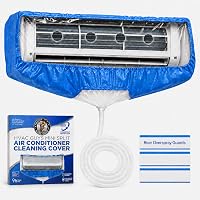
Our guide to how to clean a mini split walks through filters and the indoor unit.
Some units make this easier than others. The Costway has a self-cleaning cycle that runs at a high temperature and a washable filter, plus an auto-defrost on the outdoor unit to protect it in cold weather.
The Pioneer adds a washable, reusable dust filter and its own self-clean cycle. Built-in cleaning does not replace your filter washing, but it cuts down on the deeper work between service visits.
Also think about placement. Shade on the outdoor unit and a clear airflow path help it run efficiently.
Setting a reasonable temperature instead of big swings keeps the compressor in its efficient range. These habits do not cost anything and they stretch the value of the install over the life of the system.
So, how expensive are mini splits in the end?
Treat the total as equipment plus installation plus any electrical work, not the sticker on the box. For one room, a single-zone system is a mid-range comfort upgrade: more than a window unit, less than central air.
Get an itemized quote so labor and electrical costs are visible before you commit.
Choose a 12,000 BTU inverter heat pump for a typical room and let the install quote set your budget. The Senville LETO is the strongest all-around pick for most homes, with the Costway as a solid runner-up and the 230V Pioneer for homes already wired for it.
If you are weighing a bigger project, read our mini split installation cost guide next and price the electrical side early.
Frequently asked questions
Is a mini split cheaper than central air?
For one room, yes. A single-zone mini split avoids ductwork, so the installed total is usually lower than adding or replacing a central system.
For a whole house with several rooms, a multi-zone setup or central air can cost less per room.
Does a mini split raise the electric bill a lot?
It adds to the bill, but inverter models adjust output instead of running full blast. How much you notice depends on room size, insulation and how hard the unit works in your climate.
Can I install a mini split myself to save money?
Some DIY kits exist, but most makers require a licensed HVAC installer for the warranty. Refrigerant lines, vacuuming and electrical connections are the parts that go wrong, so budget for professional labor on most systems.
Why do two quotes for the same mini split differ so much?
Labor rates, electrical work, line-set length, wall materials and permit rules vary by region and by job. Two homes with the same unit can need very different amounts of work to reach the install spot.
Do mini splits need much maintenance after installation?
Routine care is simple: wash the filters every few weeks and clean the indoor unit each season. Skipping it lets dust and mold build up, which makes the unit work harder and can shorten its life.