8 Best Cheap Mini Splits That Are Worth Buying (November 2026)
The best budget mini split systems include the Albott 12000 BTU 115V for app control, the Mountman 12000 BTU for mode choices, and the Mountman 9000 BTU for compact rooms.
On this page (6 sections)
The Albott 12000 BTU 115V is our top cheap mini split pick for buyers who want app control and a system labeled for 115V power. For a smaller room, consider the 9000 BTU options, then confirm capacity, voltage and installation before deciding.
A low-cost ductless system can make sense when it suits the room and the home can support its electrical and installation needs. This roundup compares eight models by capacity, stated coverage, controls, efficiency figures and setup requirements.
If you are unsure which capacity fits, start with our mini split sizing chart. You can also compare models in our guides to mini splits for small rooms and 12000 BTU mini splits.
Our picks at a glance
-
1

-
2

-
3

Which cheap mini split suits each buyer?
The Albott is the clearest pick for app control on a 115V system, while Mountman's 9000 BTU model suits buyers comparing lower-capacity options. The right choice depends first on the room load and available power, then on which controls and features you'll use.
| Product | Best for | Capacity | Voltage | Controls | Our score |
|---|---|---|---|---|---|
| Albott 12000 BTU 115V | app control | 12000 BTU | 115V | App and remote | 8.2 |
| Mountman 12000 BTU | mode choices | 12000 BTU | 110/120V | Remote | 7.9 |
| Mountman 9000 BTU | compact rooms | 9000 BTU | 110/120V | Remote | 7.8 |
| Costway 12000 BTU 115V | voice control | 12000 BTU | 115V | App, remote and voice | 7.6 |
| Rovsun 9000 BTU 115V | remote simplicity | 9000 BTU | 115V/60Hz | Remote | 7.5 |
| Costway 9000 BTU R32 | R32 refrigerant | 9000 BTU | Not specified | Remote | 7.4 |
| YITAHOME 12000 BTU 220V | 220V circuits | 12000 BTU | 220V | App, remote and voice | 6.8 |
| Garvee 9000 BTU Remote | included kit | 9000 BTU | Not specified | Remote | 6.6 |
Albott 12000 BTU 115V: Best for app control
- 12000 BTU
- 115V
- WiFi and app control
- Coverage up to 750 sq. ft.
A 12000 BTU option with 115V power and built-in WiFi. Albott says it covers spaces up to 750 sq. ft.
Pros
- 115V power
- Built-in WiFi and app control
- Self-cleaning function
Cons
- Power cord is not included
- Vacuum must be pulled before use
Albott's 12000 BTU system suits buyers who want 115V power and built-in WiFi. Its app and remote control work with cooling, heating, dehumidifying and fan modes.
Albott states coverage up to 750 sq. ft. and an operating range from 5°F to 122°F. Treat the area as an initial comparison point, then size the system for the room’s insulation, windows, ceiling height and local weather.
The package includes installation components, but not a power cord. A vacuum must be pulled before use, so this is a poor fit if you expect a plug-in appliance or lack a plan for qualified installation.
Choose it if app control and a 115V label fit your setup. Skip it if you need a power cord included or have not arranged the required installation work.
Mountman 12000 BTU: Best for mode choices
- 12000 BTU
- 110/120V
- 19 SEER2
- Coverage up to 750 sq. ft.
Mountman's 12000 BTU system is rated for up to 750 sq. ft. and has sleep, ECO and turbo modes.
Pros
- 110/120V power
- 19 SEER2
- Self-cleaning and automatic defrost
Cons
- Remote control only
- Confirm installation requirements
Mountman's 12000 BTU system fits buyers seeking several operating modes and a remote based control setup. It is rated for 110/120V and has a 19 SEER2 efficiency rating.
The remote offers four fan speeds, a 24-hour timer and sleep mode, with ECO and turbo modes for different operating needs. Self-cleaning and automatic defrost are also included.
Choose it if you want multiple modes and a stated coverage area up to 750 sq. ft. Skip it if app control is a must, since its controls are remote only, or if a sizing check points to a lower capacity.
Mountman 9000 BTU: Best for compact rooms
- 9000 BTU
- 110/120V
- 19 SEER2
- Coverage up to 450 sq. ft.
This lower-capacity Mountman is rated for up to 450 sq. ft. and shares the 12000 BTU model's mode options.
Pros
- 110/120V power
- 19 SEER2
- Sleep, ECO and turbo modes
Cons
- Remote control only
- Confirm sizing for your room
This 9000 BTU Mountman is the smaller-capacity choice in the series. It uses 110/120V power and is rated for spaces up to 450 sq. ft.
The mode selection resembles its 12000 BTU counterpart, including sleep, ECO and turbo options, along with self-cleaning and automatic defrost. That makes it a practical comparison for a bedroom, office or another compact area, provided a sizing calculation supports the capacity.
Choose it if your room load suits 9000 BTU and you prefer a remote. Skip it for an open plan or a larger space unless a qualified sizing assessment confirms it can handle the load.
Compare with our guide to 12000 BTU mini splits if the room sits near a capacity boundary.
Costway 12000 BTU 115V: Best for voice control

- 12000 BTU
- 115V
- 20 SEER2
- WiFi, app and voice control
Costway pairs 115V power with WiFi, app and voice control. Costway says it covers spaces up to 750 sq. ft.
Pros
- 20 SEER2
- App and voice control
- Seven modes and eight fan speeds
Cons
- Professional installation recommended
- Check electrical and installation requirements
Costway's 12000 BTU system combines 115V power with WiFi, app and voice control. It has a 20 SEER2 rating and Costway states coverage up to 750 sq. ft.
You can use an app, remote or voice control with Alexa or Google Assistant. Seven operating modes and eight fan speeds offer more adjustments than a basic remote-only setup.
Costway recommends professional installation. Its package lists copper connection pipes and other installation parts, but an installer should confirm what the job requires and whether the included components fit the site.
Choose it if app and voice controls are worth prioritizing. Skip it if you need a simple remote-only setup or cannot arrange professional installation.
Rovsun 9000 BTU 115V: Best for remote simplicity
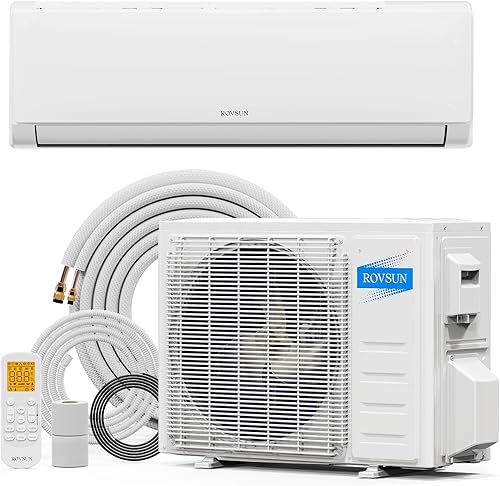
- 9000 BTU
- 115V
- 20 SEER2
- Coverage up to 400 sq. ft.
A 9000 BTU, 115V option with remote control, ECO mode and a 24-hour timer. Rovsun says it suits rooms up to 400 sq. ft.
Pros
- 115V power
- 20 SEER2
- ECO, sleep and turbo modes
Cons
- Professional installation required
- Confirm room sizing
Rovsun's 9000 BTU system is a 115V option for buyers who prefer remote controls. It has a 20 SEER2 rating and a stated coverage area up to 400 sq. ft.
The remote includes fan speed selection, sleep, timer, ECO, turbo and mute modes. Rovsun requires professional installation, so account for that work alongside the unit when comparing project budgets.
Choose it for a smaller space where 115V power and remote operation fit. Skip it if your room needs more capacity or you want app control.
Use a room load estimate rather than treating the 400 sq. ft. claim as a universal fit.
Costway 9000 BTU R32: Best for R32 refrigerant

- 9000 BTU
- 19 SEER2
- R32 refrigerant
- Coverage up to 450 sq. ft.
This Costway system is rated for spaces up to 450 sq. ft. and includes seven modes, a remote and an installation kit.
Pros
- 19 SEER2
- R32 refrigerant
- Self-cleaning function
Cons
- Professional installation recommended
- Confirm voltage before buying
This 9000 BTU Costway uses R32 refrigerant and is rated for spaces up to 450 sq. ft. It includes seven modes, four fan speeds, a remote and an installation kit.
Costway says the outdoor unit is pre-charged and recommends professional installation. The features include self-cleaning, a 24-hour timer and a screen-off function for nighttime use.
Voltage is not specified, so confirm the electrical requirement before buying. That makes this a weaker choice when you need to verify compatibility quickly or cannot get a clear answer before ordering.
Choose it if you want a 9000 BTU Costway with an installation kit. Skip it until voltage is confirmed and an installer has reviewed the setup.
YITAHOME 12000 BTU 220V: Best for 220V circuits

- 12000 BTU
- 220V
- 17.5 SEER2
- WiFi control
YITAHOME's 12000 BTU system has WiFi control and a 220V requirement, so check circuit compatibility first.
Pros
- WiFi and voice control
- Self-cleaning and automatic defrost
- Installation kit included
Cons
- Requires 220V power
- Licensed HVAC installation required
YITAHOME's 12000 BTU system is the 220V option in this roundup. It includes WiFi, app, remote and voice control, as well as five operating modes, automatic defrost and self-cleaning.
YITAHOME requires a licensed HVAC professional for installation. The package can arrive in two cartons at different times, so make sure both are on hand before assembly begins.
Choose it if your installation site has a suitable 220V circuit and you want connected controls. Skip it if the site only supports a different voltage or you want to install the system without a licensed professional.
Garvee 9000 BTU Remote: Best for included kit

- 9000 BTU
- 19 SEER2
- Remote control
- Coverage up to 450 sq. ft.
Garvee's 9000 BTU system includes an installation kit and remote, with six operating modes and a stated coverage area up to 450 sq. ft.
Pros
- Six operating modes
- Installation kit included
- Self-cleaning and automatic defrost
Cons
- Confirm voltage before buying
- Licensed HVAC setup advised
Garvee's 9000 BTU system includes an installation kit and remote, with six modes and a stated coverage area up to 450 sq. ft. It has a 19 SEER2 rating and self-cleaning and automatic defrost features.
Garvee describes operation as low as 23 dB and advises using a licensed HVAC technician. It ships in two packages, which may arrive separately.
There is a mismatch between its floor-area specification and the 450 sq. ft. coverage claim. Confirm the intended room size with an installer, and verify voltage because it is not specified.
Choose it if a remote and included kit fit your priorities. Skip it until both capacity and electrical compatibility are clear.
How should you compare cheap mini split systems?
Compare a cheap mini split by room load, electrical compatibility and installation needs first. Controls and efficiency figures matter once you know a system can be installed for the space.
How do you size a cheap mini split?
Start with the room’s heating and cooling load, not just its square footage. Insulation, window area, ceiling height, sun exposure, climate and the connection to nearby rooms can change what capacity is suitable.
The 9000 BTU choices here state coverage from 400 to 450 sq. ft., while the 12000 BTU models state coverage up to 750 sq. ft. These are manufacturer coverage claims, not a sizing recommendation for every home.
An oversized or undersized system can leave comfort uneven and make the purchase a poor fit.
Use our mini split sizing chart as a starting point, and ask an HVAC professional to assess rooms with unusual layouts or high heating and cooling demands.
Which voltage should you check before buying?
Match the system’s electrical requirements to the installation site before comparing extra features. Several picks are labeled 115V or 110/120V, while YITAHOME’s 12000 BTU model is labeled 220V.
The 9000 BTU Costway and Garvee picks do not specify voltage in the available product facts. Confirm the requirement for either one before ordering.
Ask an electrician or HVAC professional to check the circuit and installation plan.
How much should you weigh efficiency and controls?
Use the SEER2 number as one comparison point, not a promise about your monthly electricity use. Ratings in this group range from 17.5 to 20 SEER2, but your climate, thermostat settings, runtime and installation affect actual energy use.
App and voice controls can help if you want to adjust settings remotely. A remote-only model may suit you better if you prefer a simpler setup.
Do not pay for controls you will not use, and read how mini split electricity use varies before estimating running costs.
What should you confirm about installation?
Check who must install the system, what the kit contains and what the site still needs. Costway recommends professional installation for both models in this roundup, and YITAHOME requires a licensed HVAC professional.
An included kit does not make a ductless system a plug-in appliance. Installation can involve mounting indoor and outdoor units, routing lines and drain components, and meeting electrical and refrigerant requirements.
The Albott requires a vacuum before use, and its power cord is not included.
Ask the installer to review the model instructions and confirm parts, electrical work and placement before you order. Our mini split installation cost guide explains factors that can affect the project total.
What setup and care steps help a budget mini split?
Plan the location and installation before delivery, then keep to routine filter care after the system is running. A few checks up front can prevent delays and help the unit move air as intended.
Before ordering, confirm the indoor unit has a clear place on the wall and that the outdoor unit can be positioned according to its installation instructions. Check where the drain will go, how the line set will reach the outdoor unit and whether the circuit matches the model.
A qualified installer can flag site work that is easy to miss from a room measurement alone.
After installation, read the operating manual before choosing modes or timers. Keep furniture and curtains clear of the indoor air path, and use a steady set temperature instead of making frequent large changes.
If the remote or app has a sleep or timer function, set it to match your schedule rather than leaving the system running when the room is unused.
Clean or rinse a washable filter on the schedule in the manual, then let it dry fully before putting it back. Self-cleaning functions can support maintenance, but they do not replace filter care or inspection.
Ask a qualified technician to handle refrigerant or internal service work.
What mistakes make a cheap mini split a poor buy?
The biggest mistakes are choosing by a coverage number alone, overlooking voltage and assuming an included kit removes installation costs. Each can turn a low-priced unit into a mismatch for the room or project.
- Buying by square footage alone: Check the room load, windows, insulation, ceiling height and layout. Coverage claims are useful for screening, not a substitute for sizing.
- Skipping the circuit check: Compare the unit label with the power available at the installation site. Get a professional to check unclear requirements before you order.
- Treating the kit as a complete installation: Review the contents with your installer. The Albott does not include a power cord, and a vacuum must be pulled before use.
- Comparing efficiency ratings as if they predict a bill: A higher SEER2 figure is useful for comparing efficiency, but your energy use also depends on operation, climate and installation.
- Assuming every feature is necessary: Choose app, voice or advanced modes only when they solve a real need. A remote-only model may be the better value if you want straightforward control.
- Ignoring package timing: YITAHOME and Garvee packages may arrive in separate cartons. Confirm that all pieces are available before installation is scheduled.
Are cheap mini splits a sensible buy?
A cheap mini split can be a sensible buy when its capacity, voltage and installation plan suit your home. A lower purchase price does not compensate for a unit that cannot serve the room or requires work you did not budget for.
Compare the total project needs before choosing: the unit, installation, electrical work and any missing components. Our mini split pros and cons guide can help you weigh ductless heating and cooling against other options.
Which cheap mini split should you choose?
Choose Albott if you want app control on a 115V 12000 BTU system, or Mountman's 9000 BTU model if a sizing estimate supports a smaller-room option. Pick Costway's 12000 BTU model for app and voice control, and consider YITAHOME only when a suitable 220V circuit and licensed installation are available.
Before choosing any cheap mini split, confirm room capacity, electrical compatibility and installation requirements with a qualified professional. Then compare features you will actually use and see our installation cost guide to plan the work.
Our top 3 picks at a glance
-
1
-
2
-
3
Frequently asked questions
What is the cheapest mini split size to consider?
A 9000 BTU mini split may suit a smaller room, while 12000 BTU models here have coverage claims up to 750 sq. ft. The right capacity depends on room size, insulation, windows, ceiling height and climate.
Use a sizing guide before choosing by price alone.
Are cheap mini splits worth buying?
A budget mini split can be worth considering if its capacity, voltage, controls and installation needs fit your home. Compare what each system includes and whether professional installation is required.
A low purchase price won't make a mismatched unit a good fit.
Do mini splits need professional installation?
Installation needs vary by model. Costway recommends professional installation for both picks here, and YITAHOME requires a licensed HVAC professional.
If you are unsure about electrical work, refrigerant handling or local requirements, ask a qualified installer before buying.
Should I choose a 115V or 220V mini split?
Choose a system that matches the power available at the installation site. The Albott and Costway 12000 BTU models here are 115V, while YITAHOME's 12000 BTU option is 220V.
Check the unit's electrical requirements with an installer before ordering.
How do I choose a cheap mini split for a small room?
Start with a room sizing estimate, then compare 9000 BTU options by voltage, coverage claims, controls and installation needs. The Mountman 9000 BTU and Costway 9000 BTU systems both state coverage up to 450 sq. ft.
That figure is a starting point, not a substitute for proper sizing.

