TOSOT vs Della Mini Splits: Which Is Better? (November 2026)
TOSOT wins for most homes because the 18K model pairs a 20 SEER2 rating with quiet 22–36 dB operation and heating down to -13°F. Pick Della when you need a 36,000 BTU unit for a large space or a 23 SEER2 12K system for a small room.
On this page (8 sections)
- TOSOT vs Della mini split: the quick verdict
- The two brands side by side
- Which brand handles cold winters better?
- Which is quieter for bedrooms and offices?
- Which size and coverage fit your space?
- Which controls and smart features do you get?
- Which brand is easier to install and support?
- Which should you buy?
TOSOT wins this tosot mini split vs della mini split comparison for most homes. The TOSOT 18 brings a 20 SEER2 rating, 22–36 dB operation and heating down to -13°F, which covers more climates than either Della unit here.
Della still has two clear jobs. The 36K Vario cools up to 2,500 sq ft, and the 12K Vario hits 23 SEER2 for a single small room.
Your room size and your winter low decide which brand you should buy.
Both brands sell ductless inverter heat pumps that need a licensed installer and a 230V circuit. This guide compares the specs that change how each system feels day to day.

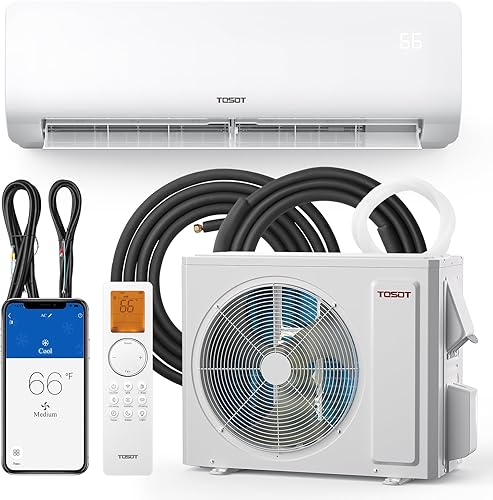
TOSOT vs Della mini split: the quick verdict
Buy TOSOT for quiet bedrooms and cold winters, and buy Della for a large open space or the highest efficiency in a small room. Each brand leads on a different spec, so the choice depends on which one matters most to you.
TOSOT leads with noise and cold-weather range. Its Cosmo units list 22–36 dB and heating down to -13°F, and the 18K model reaches 20 SEER2.
Della leads with size and peak efficiency. The 36K Vario is the only whole-floor unit here, and the 12K Vario tops the group at 23 SEER2.
Our score weighs specs, features and buyer feedback against what you're shopping for. The TOSOT 18 earns the highest score at 9.7 because it balances efficiency, quiet operation and cold-climate heating in one package.
The gap between the two brands is narrower than the score suggests. TOSOT's two units share the same sound range and the same cold-weather floor, so the real choice there is between an 18,000 BTU and a 12,000 BTU model.
Della's pair splits more sharply, since the 36K is a whole-floor system and the 12K is a bedroom unit.
The two brands side by side
The table below lines up all four units on the specs that decide most purchases. Look at capacity first, then check efficiency, heating range and noise.
| Product | Best for | Capacity | Efficiency | Voltage | Our score |
|---|---|---|---|---|---|
| TOSOT 18 | overall | 18,000 BTU | 20 SEER2 | 230V | 9.7 |
| TOSOT 12 | bedrooms | 12,000 BTU | 19 SEER2 | 230V | 9.5 |
| DELLA Vario Series 36000 BTU Mini Split | large spaces | 36,000 BTU | 19 SEER2 | 9.1 | |
| Della Vario 12000 BTU Pre-Charged | small rooms | 12,000 BTU | 23 SEER2 | 8.4 |
The pattern is clear. TOSOT puts its effort into low noise and cold-weather heating, while Della spreads its range wide, from a 12K unit for a bedroom to a 36K unit for a large floor.
Both brands use inverter compressors and both are ETL listed and AHRI certified. Neither brand sells a DIY kit, so plan for an installer either way.
Both TOSOT units carry the Cosmo model name and a 16 ft copper line set. Della's kit lengths differ by model, at 16.4 ft on the 12K and a full kit on the 36K with 1/4 inch and 5/8 inch copper pipes.
Where the brands differ most
The biggest gap is the cold-weather floor. TOSOT's two units heat down to -13°F, and Della's stop at -4°F.
The second gap is noise. TOSOT lists 22 dB at its quietest, which sits below Della's 28 dB on the 12K and 36 dB on the 36K.
Efficiency splits by model rather than by brand. Della's small unit has the highest number, and TOSOT's large unit beats Della's large unit on SEER2.
Warranty structure is the third gap. TOSOT publishes a 5-year parts and 8-year compressor term, while Della offers lifetime parts coverage that depends on registering within 100 days and on whether the install was licensed.
Which brand handles cold winters better?
TOSOT handles colder weather, with both units rated to -13°F against Della's -4°F. If your winter nights drop below -4°F, TOSOT leaves you more margin before a backup heat source matters.
That difference is the single strongest reason to choose TOSOT in northern states. A heat pump that keeps running through a deep cold snap is worth more than a small efficiency gain.
Della's -4°F rating still covers most of the country. Homes that rarely see single digits will never notice the gap between the two brands.
Both brands also state the same peak summer figure of 118°F for cooling. That matters in places like Phoenix or inland California, where the outdoor unit has to keep working through a long hot afternoon.
What the heating numbers mean for you
TOSOT's 18K lists 19,100 BTU/h of heating capacity against 18,000 BTU/h of cooling, so it heats slightly harder than it cools. The 12K matches its 12,000 BTU/h cooling figure exactly.
Della's 36K lists 36,000 BTU/h for both heating and cooling, and the 12K Vario also matches at 12,000 BTU/h. These are steady-state figures, and real output drops as the outdoor temperature falls.
Those matching heating and cooling figures matter when you plan a full year. A unit that heats as hard as it cools can carry a room through winter without leaning on a space heater, provided your outdoor temperature stays inside the rated range.
If you want to compare ductless heating against a traditional furnace, our guide to a mini split heat pump vs forced air system explains where each one wins.
Which is quieter for bedrooms and offices?
TOSOT is the quieter brand, running as low as 22 dB against Della's 28 dB floor. A 6 dB gap is close to a doubling of perceived loudness at low levels, which matters in a nursery or home office.
Both TOSOT units share the same 22–36 dB range. Della's 12K Vario lists 28 dB, and the larger 36K starts at 36 dB.
The 36K Della number reflects its size, since a 3-ton unit moves far more air. A large unit in a large room is normal, but a 36 dB floor is audible when the room is otherwise silent.
Matching noise to the room
Put TOSOT in any room where you sleep, study or record. The 18K suits a primary bedroom or a small office, and the 12K suits a kids' room.
Della's 12K Vario is also a calm choice for a bedroom at 28 dB. Its 36K makes more sense in a living area or open plan where background noise hides the fan.
One more TOSOT feature helps at night. The Cosmo units include iFEEL sensing and a self-cleaning cycle, so the system can follow the temperature near you and dry its own coil after cooling.
Which size and coverage fit your space?
Della covers the biggest single space, and TOSOT covers the mid-size rooms where most people install a mini split. The 36K Vario reaches up to 2,500 sq ft, while TOSOT's largest unit here is 18,000 BTU.
Della's own sizing advice puts a 12,000 BTU unit near 550 sq ft and an 18,000 BTU unit near 1,000 sq ft. By that guide, Della's 36K Vario is the right pick for a whole floor or a large open plan.
TOSOT's 18K suits roughly the same mid-size room as Della's sizing note suggests. Its 12K handles a bedroom or small office.
Della's 36K is also a 3-ton system, so it carries the weight and airflow of a whole-floor unit. TOSOT's 18K is listed at 1.5 tons and its 12K at 1 ton, which keeps both units lighter and easier to hang on a bedroom wall.
If you're unsure which capacity you need, our comparison of Rovsun vs Costway mini split walks through the same sizing logic with two other budget brands.
The 230V question
Every unit in this comparison runs on 230V, so neither brand is easier to wire. Della's 36K Vario needs a 30A maximum fuse, and the 12K Vario needs 15A.
Have your electrician size the circuit to the unit you buy rather than assuming an existing outlet will do.
The 230V requirement also rules out plugging either brand into a standard wall socket. Plan the circuit and the outdoor disconnect as part of the install quote, not as an afterthought.
Which controls and smart features do you get?
TOSOT gives you the deeper app, and Della gives you the simpler smart setup. Both support voice control, and both ship with a remote.
TOSOT runs on the GREE+ app, which supports Alexa and Google Assistant and lets you set daily and weekly schedules. That means you can pre-cool the room before you get home or pre-heat it before you wake up.
Della's Vario units work with Alexa over 2.4 GHz WiFi. That's the only band Della supports, so a router that only offers 5 GHz on a given network won't connect.
Extra features worth knowing
Della's 36K Vario adds 4D airflow that moves air up and down and left to right, plus a 24-hour timer, sleep mode and a turbo function. Its remote senses room temperature where you sit, not at the indoor unit.
TOSOT's Cosmo units add iFEEL sensing and a self-cleaning function. Both TOSOT models also include a 16 ft copper line set, and Della includes a full installation kit on the 36K and a 16.4 ft kit on the 12K.
Both brands offer a dry mode for dehumidifying. Della lists a dedicated dehumidification mode on its units, and TOSOT lists a dry function on the Cosmo pair.
In a humid climate, that function can do real work in spring and fall when you don't need full cooling.
Which brand is easier to install and support?
Neither brand is a DIY project, and both need a vacuumed line set and correct refrigerant handling. The difference sits in the extras in the box and the warranty terms.
TOSOT includes a 16 ft copper line set and essential installation accessories with both Cosmo units. It meets UL, ETL and AHRI standards and carries a 5-year parts warranty and an 8-year compressor warranty, with 24/7 technical help.
Della includes a full kit on the 36K Vario and a 16.4 ft kit on the 12K, and both units are ETL listed and AHRI certified. Della offers lifetime parts coverage once you register within 100 days, with better terms for licensed installs.
Warranty fine print to compare
TOSOT's coverage is simple: 5 years on parts, 8 years on the compressor, no registration step in the published terms.
Della's lifetime coverage depends on registration and, for the enhanced version, a licensed installation. Labor isn't covered on either brand, so keep your installer's invoice.
Della also notes that line-set changes over 25 ft on the 36K need a refrigerant adjustment. TOSOT's 16 ft set covers most single-room installs without a change.
If you're weighing other brands at similar sizes, our Costway mini split vs Senville comparison shows how warranty terms shift between budget names.
Which should you buy?
Pick TOSOT for a bedroom, office or cold climate, and pick Della for a large space or the best small-room efficiency. That is the short version of this tosot mini split vs della mini split decision.
Buy the TOSOT 18 if you want one strong unit for a mid-size room, quiet operation and heating that holds up in real winter cold. It earns the top score at 9.7 for a reason.
Buy the TOSOT 12 if the room is a bedroom or office and the 18K is more capacity than you need. You keep the same 22–36 dB range and -13°F heating for less cooling power.
Choose the Della 36K Vario if you're conditioning a large open floor up to 2,500 sq ft and want a full installation kit in the box. Accept the 36 dB floor and the -4°F heating limit.
Choose the Della 12K Vario if efficiency is your priority in a small room and you want the 23 SEER2 rating. Its 28 dB operation still suits a bedroom, and 550 sq ft covers a typical apartment room.
If you're still deciding whether a ductless unit makes sense at all, our mini split vs portable AC comparison shows where each one earns its place.
Frequently asked questions
Is TOSOT better than Della for mini splits?
TOSOT is the better pick for most homes. Its 18K and 12K units reach 20 and 19 SEER2, run as low as 22 dB and heat down to -13°F, while Della's two Vario units here stop at -4°F.
Della wins on large-room coverage and small-room efficiency.
Can a TOSOT mini split heat in very cold weather?
TOSOT says both Cosmo units here heat in outdoor temperatures down to -13°F. Della's Vario 36K and 12K models are rated down to -4°F.
If your winters drop below -4°F, the TOSOT range gives you more room before you need a backup heat source.
Do both brands need professional installation?
Yes. TOSOT requires professional installation with proper vacuuming and refrigerant handling, and Della says its systems are not DIY mini splits.
Budget for an HVAC technician on either brand, since the line set has to be vacuumed and the charge checked.
Which brand is quieter, TOSOT or Della?
TOSOT is quieter on paper. The 18K and 12K Cosmo units run from 22 to 36 dB, Della's 12K Vario runs at 28 dB and the 36K Vario starts at 36 dB.
That makes TOSOT the safer choice for a bedroom or nursery.
What is the difference between 19 and 23 SEER2?
SEER2 measures cooling efficiency, and a higher number means less power for the same cooling. Della's 12K Vario at 23 SEER2 is the most efficient unit here, ahead of TOSOT's 20 SEER2 18K and the 19 SEER2 models from both brands.
Do these mini splits work with Alexa?
Yes. TOSOT lists Alexa and Google Assistant support through the GREE+ app, and Della's Vario series works with Alexa over 2.4 GHz WiFi.
Both also ship with a remote, and TOSOT adds daily and weekly scheduling in the app.


