Mini Split vs Electric Baseboard Heat: Which Costs Less? (November 2026)
A mini split can cost less to run than electric baseboard heat because it moves heat instead of making it with resistance. In this mini split vs baseboard heat comparison, your climate, room layout, electricity rate and installation needs determine which system fits.
On this page (10 sections)
- Mini split vs baseboard heat: which costs less to run?
- How do the two heating systems work?
- What does installation add to the cost?
- How does cold weather change the comparison?
- Which system gives you more control?
- Which system needs more care?
- What should you compare before choosing?
- What setup mistakes should you avoid?
- Who should choose each system?
- Mini split vs baseboard heat: which should you pick?
A mini split can cost less to run than electric baseboard heat because it moves heat instead of making it with resistance. In this mini split vs baseboard heat comparison, your climate, room layout, electricity rate and installation needs determine which system fits.
Baseboards are direct electric heaters, often controlled one room at a time. A mini split heat pump can heat and cool a zone, but needs a matched system and professional planning.
For a broader look at system types, see our guide to mini splits and other heat pumps. This comparison focuses on electric baseboard heat.

Mini split vs baseboard heat: which costs less to run?
A mini split may cost less to run because it transfers heat instead of producing it through electric resistance. The size of that advantage depends on the heat pump's seasonal performance and the home's conditions.
A baseboard heater converts electricity into heat in the room. Its operation is straightforward, but every unit of heat comes from electricity used at the heater.
A mini split uses a compressor and refrigerant cycle to move heat indoors. Its efficiency changes with outdoor temperature, so don't assume the same savings in every climate or at every time of year.
Compare heating efficiency figures for the exact equipment. SEER2 describes cooling efficiency, so it doesn't tell you how efficiently a mini split heats your home.
What affects the electric bill in a mini split vs baseboard comparison?
Your bill depends on how much heat the room loses, how often the system runs and what you pay per kilowatt-hour. Drafts, insulation, thermostat settings and weather can matter as much as equipment choice.
The number of heated rooms matters too. One mini split may cover an open living area, while a home with separated rooms may need multiple indoor units or another heat source.
Our guide to mini split electricity use explains how to estimate operating costs from power use and your electric rate. Use the same assumptions for both systems when comparing.
How do the two heating systems work?
Baseboards heat a room directly, while a mini split moves heat into the room through an indoor air handler. Their different delivery methods affect comfort, room coverage and installation.
An electric baseboard heater warms air near the unit, which then circulates through the room. Each room can have its own heater and thermostat, giving you simple zone control.
A mini split uses an outdoor unit connected to a wall mounted indoor unit. The indoor unit blows conditioned air through the space, so placement and room layout affect how evenly heat spreads.
Which works better for separate rooms?
Baseboards are easier to control room by room; a single mini split is a better fit for an open area than a home divided by closed doors. A multi-room layout may need more than one indoor unit.
If you already have baseboards in bedrooms and a mini split in the main living space, you can use each where it makes sense. Check the electrical load and local rules before changing or removing heaters.
For a new system, plan around the doors, walls and airflow paths. A heating contractor can assess the home's heat loss and recommend where equipment belongs.
What does installation add to the cost?
Baseboards may have a lower installation cost when appropriate wiring is already in place, while mini split installation usually involves more equipment and labor. Get quotes for the same rooms and scope before comparing totals.
A mini split installation can include mounting indoor and outdoor units, routing refrigerant lines, connecting wiring and arranging drainage. Cooper & Hunter requires professional installation for the MIA system, and local permits or electrical work can add cost.
Baseboard installation can require new circuits or a panel upgrade if the electrical service can't handle the added load. Wall placement and existing wiring also affect labor.
Review the cost factors for mini split installation before requesting bids. Ask contractors to itemize equipment, electrical work, permits and any modifications to the home's exterior.
How does cold weather change the comparison?
A mini split's heating output and efficiency can fall as outdoor temperatures drop, so check its published operating range for your climate. Baseboards provide direct electric heat whenever their circuit and thermostat are working.
Cooper & Hunter specifies heating operation down to 5°F, and Pioneer specifies operation down to -4°F. Mountman's specifications don't include a low temperature limit.
Those figures describe operating limits, not a guarantee that a unit will heat every home comfortably at that temperature. Proper sizing and the home's heat loss still matter.
In a cold region, ask an HVAC professional whether the chosen mini split can meet the design heating load. Some households retain baseboards as backup for very cold days or rooms outside the mini split's reach.
Which system gives you more control?
Baseboards offer direct control by room, while a mini split combines heating and cooling in the spaces served by its indoor unit. Think about how you use each room and whether you want one system for both seasons.
A baseboard thermostat can control its own room. That can help avoid heating unused rooms, though each heater must be set and managed separately.
A mini split can heat and cool a zone and adjust its output as conditions change. The Cooper & Hunter MIA includes a Smart Kit for app control, while the Mountman and Pioneer systems include remote controls.
If you want app control, check whether it's included with the exact system you choose. The Pioneer optional app module is sold separately.
Which system needs more care?
Baseboards have fewer system parts to clean, while mini splits need routine filter care and periodic professional service. Follow the manual for the exact equipment.
Keep dust and objects away from baseboard heaters, and don't block the space around them. Check the heater's instructions for cleaning and safe clearance.
A mini split's indoor filter needs regular cleaning to keep airflow clear. The outdoor unit also needs room for airflow and should be kept free of leaves, snow and other blockages as directed by its manual.
Our mini split cleaning guide covers filter and indoor unit care. Plan for the upkeep before choosing a system based only on monthly energy use.
What should you compare before choosing?
Compare expected heating cost, installation scope and room coverage for your own home. A lower operating cost can't make up for a system that misses rooms or needs expensive electrical changes.
Ask for a mini split estimate based on a heat loss calculation, not only the room's square footage. Ask for the expected seasonal heating performance at local winter temperatures.
For baseboards, confirm the circuit capacity and whether each room needs a separate thermostat. Include any electrical upgrades in the total cost.
Then compare the expected annual energy use and total installed cost over the time you expect to stay in the home. If you want to understand the tradeoffs beyond heating bills, read our mini split pros and cons guide.
Which mini split fits a baseboard replacement plan?
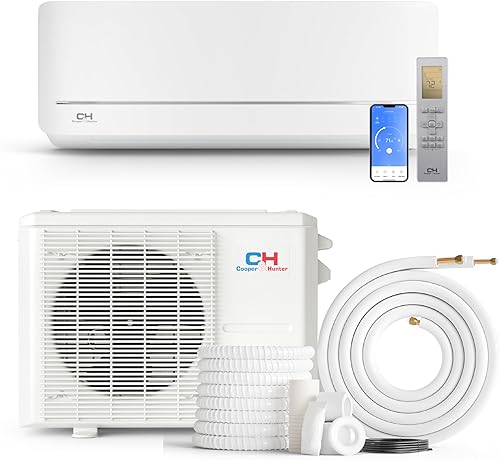
The Cooper & Hunter MIA suits buyers who want app control alongside heating and cooling in one zone. It has a 12,000 BTU capacity and 21.2 SEER2, and Cooper & Hunter requires professional installation.
The Mountman offers four modes, including heat, and remote control for straightforward operation. Its heating temperature range isn't specified, so get the model's heating performance details before relying on it through a cold winter.
The Pioneer Diamante Pro is the clearest fit of these three for a colder climate because its heating operation is specified down to -4°F. Its optional app module is sold separately, and capacity still needs to match the room.
What setup mistakes should you avoid?
The most common planning mistake is choosing equipment by room area alone. Heat loss, insulation, ceiling height, windows, airflow paths and local winter temperatures all affect how much heat a room needs.
Don't assume one wall mounted indoor unit will warm bedrooms behind closed doors. Confirm which spaces it can serve, and use a contractor's heat loss assessment to plan capacity and placement.
For a mini split, plan where the outdoor unit can sit, how refrigerant lines will reach the indoor unit and where condensate will drain. Confirm electrical requirements, permits and manufacturer installation rules before buying equipment.
For baseboards, check the circuit load before adding heaters. Keep the required clearances around each unit and avoid placing furniture, curtains or storage where they can block heat or create a safety concern.
Who should choose each system?
Choose a mini split when you want efficient heating and cooling for a well-defined zone and are ready for installation planning. Choose baseboards when you want direct room control, have suitable wiring and prefer a simpler system for individual spaces.
A mini split is a strong fit for an open living area, addition or renovated room without ductwork. It can also suit someone replacing separate cooling and heating equipment with one system, provided the model covers the local climate and the installation budget works.
Skip a single-zone mini split if you need even heat across many closed rooms and don't plan to add indoor units or retain another heat source. Also pause if you can't arrange the required electrical work and professional installation.
Baseboards fit rooms that need independent thermostats, homes with existing units in good condition, and situations where you heat only selected rooms. Skip them as the primary choice if your goal is to reduce electric resistance heating use across a large, frequently occupied area.
A hybrid setup can make sense when one mini split serves the main open area and baseboards remain in bedrooms or serve as backup. It lets you target heat where people spend time without expecting one air handler to reach every corner of the home.
Mini split vs baseboard heat: which should you pick?
Pick a mini split for a matched open zone where heating and cooling, lower potential energy use and professional installation make sense together. Pick baseboards for simple room-by-room control, existing suitable wiring and spaces that don't need a shared cooling system.
Before you decide, compare local winter performance, expected electricity use, installation quotes and room coverage. The ductless mini split buyer's guide can help you plan capacity and setup, while our mini split pros and cons guide covers the broader tradeoffs.
Frequently asked questions
Is a mini split cheaper to run than baseboard heat?
A mini split can use less electricity for the same amount of heat because it moves heat rather than making it with electric resistance. The actual savings depend on the unit's heating efficiency, outdoor temperatures, electricity rate, room insulation and thermostat settings.
Compare seasonal heating data for the exact models.
How much cheaper is a mini split than electric baseboard heat?
There isn't one savings figure that fits every home. Start with each system's heating efficiency and your electricity rate, then account for the hours it runs, outdoor temperature and heat loss.
Installation costs also affect the total cost, especially if you need new electrical work or several indoor units.
Do mini splits work in cold weather?
Some mini splits are designed to keep heating at low outdoor temperatures, but the range differs by model. For example, the Pioneer Diamante Pro is specified to operate in heating down to -4°F, while the Cooper & Hunter MIA is specified down to 5°F.
Check the exact model's heating data for your climate.
Can a mini split replace baseboard heaters?
A mini split may heat the main area effectively, but a single indoor unit may not distribute warmth evenly through closed rooms or around corners. Have the home's heat loss and room layout assessed, and check local requirements before removing existing heat.
Some homes keep baseboards for backup or separate rooms.
Are electric baseboard heaters cheaper to install?
Baseboard heaters can be simpler to add where suitable electrical service is already available, while a mini split needs indoor and outdoor equipment and refrigerant lines. Costs vary with wiring, mounting, line routing, permits and labor.
Compare written installation quotes for the same heated area and comfort needs.


