115V vs 230V Mini Splits: Which Fits Your Home? (November 2026)
Choose a 115V mini split when the exact system fits your home’s electrical setup; choose a 230V model when its instructions and an electrician confirm the circuit is suitable. Voltage alone doesn’t tell you which system will heat or cool better.
On this page (8 sections)
- 115V vs 230V mini split: what is the main difference?
- Which 115V and 230V models are in this comparison?
- Which voltage fits your home’s electrical setup?
- Does voltage affect efficiency or power use?
- Does voltage affect heating and cooling capacity?
- What installation work should you plan for?
- Which 115V vs 230V mini split should you choose?
- Related mini split guides
Choose a 115V mini split when the exact system fits your home’s electrical setup; choose a 230V model when its instructions and an electrician confirm the circuit is suitable. In a 115V vs 230V mini split comparison, voltage is an electrical planning detail, not a shortcut for deciding which system will heat or cool better.
The two Costway systems compared here are both rated at 12,000 BTU and 20 SEER2. One is 115V and the other is 208/230V.
Cooper & Hunter’s MIA is also a 12,000 BTU, 115V model, with a stated 21.2 SEER2 rating.
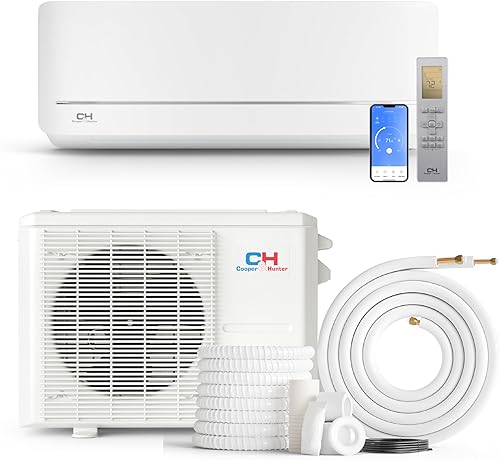 Best for a higher stated efficiency rating
Cooper & Hunter MIA 12000 BTU 115V

115V vs 230V mini split: what is the main difference?
The main difference is the electrical supply each system is designed for. The right choice depends on the exact unit’s requirements and the circuits available in your home.
A 115V system may be worth considering if its specified circuit works with your electrical plan. A 208/230V system may fit a different home setup, but the voltage by itself doesn’t tell you whether your panel or wiring is ready for it.
The Costway 115V and 208/230V versions share a 12,000 BTU capacity and 20 SEER2 rating. Both include app, remote and voice controls, as well as 7 operating modes.
Their voltage options are the distinction most relevant to this comparison.
Does a 115V mini split use a regular outlet?
A 115V label doesn’t mean you should plug a mini split into any available outlet. The manufacturer’s electrical instructions determine what circuit and connection the unit needs.
Mini splits can draw substantial power while heating or cooling. Have an electrician check the exact model requirements, the circuit, wiring and panel capacity before purchase or installation.
Is 230V always the better choice?
No. A 230V model only makes sense when it suits the home’s electrical supply and the system’s other requirements.
The number doesn’t prove better efficiency, comfort, capacity or lower operating cost.
Compare equipment ratings and fit as well as voltage. Our guide to mini split basics explains the main system terms to check before you choose.
Which 115V and 230V models are in this comparison?
The Costway systems offer a direct voltage comparison, while the Cooper & Hunter MIA gives you another 115V option. Their stated capacities are all 12,000 BTU, but their efficiency ratings and features differ.
| Product | Best for | Voltage | Capacity | Efficiency | Our score |
|---|---|---|---|---|---|
| Cooper & Hunter MIA 12000 BTU 115V | a higher stated efficiency rating | 115V | 12,000 BTU | 21.2 SEER2 | 8.4 |
| Costway 12000 BTU 115V | a 115V Costway option | 115V | 12,000 BTU | 20 SEER2 | 7.6 |
| Costway 12000 BTU 230V | a 208/230V Costway option | 208/230V | 12,000 BTU | 20 SEER2 | 7.5 |
The 115V Costway and its 208/230V counterpart both have a 20 SEER2 rating, heating and cooling, and app, remote and voice control. The Cooper & Hunter MIA is rated 21.2 SEER2 and includes a smart kit.
These details don’t determine electrical compatibility for your home. Ask an electrician to check the installation requirements for the exact model you’re considering.
Which voltage fits your home’s electrical setup?
Let an electrician match the system to your panel and wiring before you choose a voltage. Don’t choose a unit first and assume an existing circuit will support it.
Start with the manufacturer’s installation instructions for the specific model. Ask the electrician to confirm the required circuit, breaker, wire size, disconnect and connection method, along with any work needed at the panel.
If a circuit upgrade is needed, include it in your budget and schedule. Our guide to mini split installation costs explains why installation conditions can affect the total project cost.
What should you check before buying a 115V mini split?
Check that the system’s stated electrical requirements suit a circuit the electrician approves for that location. Also confirm where the indoor and outdoor units will go and how the line set and wiring will run.
A 115V system may appear simpler when you already have a suitable supply nearby. Still, don’t treat the voltage label as installation approval.
The exact unit instructions and the home’s wiring determine what work is needed.
The Costway 12000 BTU 115V is a 12,000 BTU heating and cooling system with a 20 SEER2 rating, Wi-Fi, app, remote and voice controls.
The Cooper & Hunter MIA is another 115V choice with a stated 21.2 SEER2 rating and smart kit. Cooper & Hunter requires professional installation.
What should you check before buying a 230V mini split?
Confirm that the home can supply the exact voltage and circuit the unit requires. Have an electrician assess the panel and installation route before treating 208/230V as a fit.
The Costway 12000 BTU 230V system is rated 20 SEER2, the same as the 115V Costway. Choose between them based on the verified electrical setup and the rest of your project, not on voltage alone.
Does voltage affect efficiency or power use?
Voltage alone doesn’t tell you which mini split will use less electricity. Compare the exact system’s efficiency rating and operating details, then consider how well it is sized for your home.
The two Costway versions in this comparison both carry a 20 SEER2 rating. Cooper & Hunter’s MIA is rated 21.2 SEER2, but that figure doesn’t make it a direct efficiency comparison across different models and conditions.
Actual electricity use depends on factors beyond voltage, including system size, weather, thermostat settings and how the home is used. For a broader explanation, see whether mini splits use a lot of electricity.
Does voltage affect heating and cooling capacity?
Use the capacity and a proper room assessment to judge heating and cooling fit. Voltage doesn’t replace sizing, and a unit that is too small or too large can be a poor match for the space.
All 3 systems here are rated at 12,000 BTU. Costway describes its two models for spaces up to 750 sq ft.
Cooper & Hunter describes the MIA Series range as varying by BTU capacity and recommends asking a technician about room fit.
Treat any square-foot figure as a starting point. Ceiling height, insulation, windows, climate and room layout can change the capacity a space needs.
Use our mini split sizing chart to understand the factors that go into a size estimate. For a detailed choice, ask an HVAC professional to assess the room.
What installation work should you plan for?
Plan for professional installation and electrical review with either voltage. Both Costway models say a professional technician should install them, and Cooper & Hunter requires professional installation for the MIA.
The electrical connection is only one part of the work. A ductless system also needs indoor and outdoor unit placement, a path for the refrigerant lines and wiring, and suitable drainage.
Confirm who will handle each part before ordering. If the installer recommends electrical changes, ask what the work includes and how it affects the project plan.
The ductless mini split buyer’s guide covers the broader system choices, while mini split vs heat pump explains how those terms relate.
Which 115V vs 230V mini split should you choose?
Choose the Cooper & Hunter MIA if you want a 115V system with a stated 21.2 SEER2 rating and smart kit. Choose the 115V Costway if its circuit requirements fit your home and you want a 12,000 BTU system rated 20 SEER2.
Choose the 208/230V Costway if an electrician confirms its electrical needs fit your project. Before deciding, confirm room sizing, electrical needs, installation scope and total project cost.
Related mini split guides
- Understand the basics of mini splits
- Estimate mini split installation costs
- Choose a mini split size with the sizing chart
- Compare mini splits and heat pumps
- Read the ductless mini split buyer’s guide
Frequently asked questions
Is a 115V mini split easier to install than a 230V one?
Not necessarily. A 115V unit may suit an existing circuit, but the circuit still has to meet the system’s exact requirements.
A 230V unit may need a different electrical setup.
Ask a licensed electrician to review the manufacturer’s instructions and your panel before installation.
Can I plug a 115V mini split into a regular outlet?
Don’t assume a 115V mini split can use any regular outlet. The system’s required circuit, breaker, wiring and connection method depend on its instructions and electrical load.
Have an electrician confirm the outlet and circuit are suitable before you buy or connect the unit.
Does 230V make a mini split more efficient?
Voltage alone doesn’t establish efficiency. Compare the exact models’ efficiency ratings and operating requirements, then check whether the system is correctly sized for the space.
In this comparison, both Costway models are rated 20 SEER2, while the Cooper & Hunter MIA is rated 21.2 SEER2.
Do 115V and 230V mini splits have the same capacity?
They can have matching stated capacity. The two Costway systems here are both rated at 12,000 BTU, though one is 115V and the other is 208/230V.
Capacity alone doesn’t confirm a fit for your room, so use a proper sizing assessment.
Should an electrician install a mini split?
Ask a licensed electrician or qualified HVAC professional to confirm the electrical work and follow the exact system instructions. The Costway systems say installation should be performed by a professional technician, and Cooper & Hunter requires professional installation for its MIA system.


